
America's Best: Super Detroit's Big 3
The signs are everywhere: American automakers are on the mend. Free of any bailout stigma, Ford is leading the pack, with compelling cars and trucks delivering massive profits. One step behind, General Motors has emerged from bankruptcy as a leaner, nimbler company, with several new models that are scoring well with critics and consumers. And Chrysler has allied with Italy's Fiat to revamp its aging car lineup. Whether Ford can sustain its momentum, and whether GM and Chrysler can thrive again, remains to be seen. What is clear is that Detroit's Big Three are raising their game. These 10 models are proof.
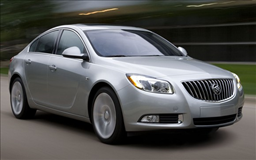
Buick Regal Turbo
With impressive models such as the Enclave crossover and LaCrosse sedan, Buick is suddenly back on the consumer radar. Its sales are up nearly 60 percent in 2010, more than any other brand in the industry. The jewel in its crown is the new Regal. It glows at the curb, with a modern sophistication that's often lacking in Motown sedans. The good vibes continue with a handsome interior that's reminiscent of German luxury cars. And the 220-horsepower turbocharged inline 4-cylinder engine delivers the power and smoothness you expect from a premium sedan.
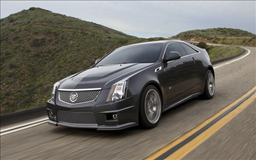
Cadillac CTS
The sedan that kicked off a renaissance at Cadillac adds a coupe for 2011, a sharp-edged rogue that looks one part show car, one part stealth fighter. The CTS is a red, white and blue reply to anyone who says America can't build a sporty luxury car to compete against Europe or Japan. The cabin is Lexus-quiet, smartly finished and loaded with intuitive technology. Its 3.6-liter 304-horsepower V6 engine is mated to a suspension that expertly balances long-distance comfort and sporty control. The CTS sedan also offers the space of a midsize luxury car at the price of compacts such as the BMW 3-Series.

Chevrolet Corvette
No list of America's best cars would be complete without the iconic Corvette. That's not just nostalgia talking: The Corvette continues to up its game, achieving modern feats of performance that leave many exotic foreign sports cars — and their owners — quaking in their boots. For less than $50,000 to start, the Corvette brings a 430-horsepower V8 engine and a fat roster of performance technology. The Corvette's surprising cargo space and fuel economy, at up to 16 mpg city/26 mpg highway for the base model, is just the icing on its speedy cake.

Chrysler 300
Those who dismiss any chance of a Chrysler comeback shouldn't forget cars like the 300. The 300 sedan blew people away when it arrived in 2005, reminding them that Chrysler can score big when it decides to swing for the fences. With Mercedes E-Class components covered by a bold, all-American shell, the 300 became a smooth-driving hit with both urban and suburban buyers. The 300 then spawned Hemi-powered offshoots, including the Dodge Charger and Challenger. An all-new 300 will reach showrooms next year, with a more elegant shape, a higher-class interior and Chrysler's solid new Pentastar V6 engine as the base power plant.

Dodge Ram
Full-size pickup trucks are the one automotive segment still owned by Detroit. And while Ford's F-150 remains the nation's best-selling vehicle, the Dodge Ram is our current champ. Behind its macho truck-stop grille, the Dodge offers a choice of three engines, including a 5.7-liter 390-horsepower Hemi that outmuscles anything in the half-ton class. The Ram's unique coil-spring rear suspension delivers a less jarring ride than Ford or Chevy, and at no expense to hauling or towing ability. The Ram is also plush and roomy, stuffed with clever storage solutions, including lockable, waterproof boxes in the bed.
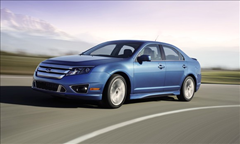
Ford Fusion
Who says America can't build a hybrid? The gas-electric version of Ford's popular midsize sedan whips the Toyota Camry Hybrid in looks, handling and fuel economy — 41 mpg city/36 mpg highway versus the Camry's 31/35. The standard Fusion is one of the market's slickest-driving family sedans, with a 175-horsepower 4-cylinder engine or with a 240-horsepower V6. A Fusion Sport AWD provides winter security, though its all-wheel drive and 263-horsepower V6 trim fuel economy to just 17/24.
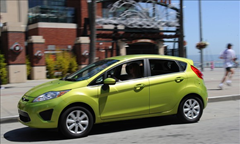
Ford Fiesta
Small cars have been a notorious blind spot for Detroit. Now, with cars such as the Ford Fiesta and Chevrolet Cruze, that's changing. Straight out of Europe, the Fiesta hatchback is the kind of small car you buy because you want it, not because you can't afford anything else. The Ford is cute as all get out, and surprisingly fun to drive, despite a modest 118 horsepower from its 1.6-liter 4-cylinder engine. The Fiesta also returns 40 mpg highway, thanks in part to its dual-clutch automatic transmission, a technology typically found in 6-figure sports cars. Its biggest knock: The Fiesta isn't very roomy inside.

Ford Mustang
Loyalty rules in the pony-car war among the Mustang, Chevy Camaro and Dodge Challenger. But the rare person who tests all three may have to admit: The Mustang is the sharpest-handling and the most fun to drive. The Ford was already updated for 2010 with fresh styling, suspension, brakes and a higher-quality interior. It's a pair of terrific new engines, though, that puts the 'Stang over the top for 2011. Even budget buyers get a 3.7-liter V6 engine that combines a burly 305 horsepower with a stingy 31 mpg highway.

GMC Acadia
Can't see yourself in a minivan? Check out the Acadia — or its siblings, the Buick Enclave and Chevy Traverse. With smooth styling, three roomy rows of seats and trusty handling, the Acadia is one of the best large crossovers for Americans with growing families. The GMC accommodates seven or eight passengers, including the ability to comfortably fit 6-foot-tall adults in the third row. The Acadia is roomier than, say, a Honda Pilot, and beats it in the fuel-economy department, at 17 mpg city/24 mpg highway for the front-drive version.

Jeep Grand Cherokee
Jeep has seen sales slip away as Americans fled SUVs for crossovers. Now, an all-new 2011 Grand Cherokee looks to lure them back, and it's a dandy. The Grand Cherokee looks terrific, restoring the clean, muscular lines of classic Jeeps but adding newfound elegance. A lavishly redesigned cabin offers proof that Jeep is finally getting serious about interior design. The Jeep is based on the solid Mercedes M-Class, with an independent rear suspension that does wonders for ride and handling. The new Pentastar V6 engine delivers 290 horsepower, with an optional 360 horses from a 5.7-liter V8 Hemi.


